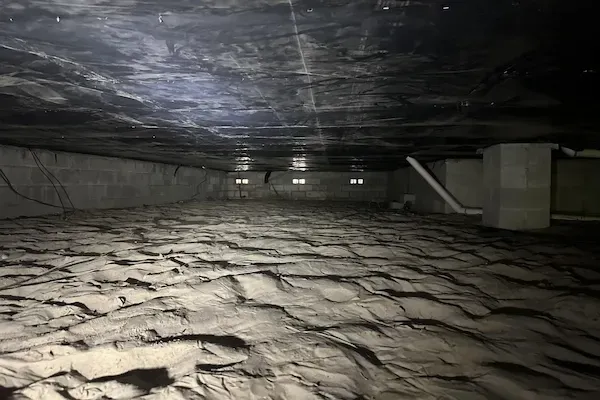
Why Closed-Cell Spray Foam Works Best in Florida Crawl Spaces
Crawl spaces are basically humidity factories with a pest problem. If you've ever peeked under your house and found standing water, moldy wood, or evidence of unwanted wildlife, you're not alone.
The good news? Closed-cell spray foam transforms disaster zones into protected, dry spaces that actually improve your home's performance. While other insulation types might seem cheaper upfront, they fail spectacularly in the harsh environment under Florida homes.
Let's talk about why crawl space insulation needs to be more than just pink fiberglass barely clinging to floor joists while moisture destroys everything around it.
What Makes Florida Crawl Spaces So Challenging?
Florida sits on a high water table, which means ground moisture loves creeping into crawl spaces like an uninvited house guest who never leaves. Add our year-round humidity, averaging 70 to 90 percent, and you've created perfect conditions for mold, wood rot, and structural damage.
Traditional crawl space approaches like vented designs actually make things worse by introducing hot, humid outdoor air that condenses on cooler surfaces underneath your home. That condensation drips onto joists, subfloors, and anything else unlucky enough to be down there.
Standing water pools in low spots. Pests discover this moisture-rich paradise and move in permanently. Your HVAC ducts running through this swamp work harder and waste energy fighting the humidity.
How Closed-Cell Creates an Impermeable Moisture Barrier
Closed-cell spray foam solves moisture problems by creating a complete vapor barrier that water simply cannot penetrate. The material's cellular structure consists of tiny closed cells packed so tightly that moisture molecules can't pass through. When properly applied to crawl space walls and rim joists, it seals out ground moisture trying to migrate through concrete or block walls.
The foam adheres directly to surfaces, eliminating gaps where humid air could infiltrate. Unlike fiberglass batts that absorb moisture like sponges or rigid foam boards with seams that leak, closed-cell spray foam forms one continuous protective layer. This impermeability protects your home's foundation and floor structure from moisture damage that costs thousands to repair later.
The Structural Benefits Beyond Moisture Protection
Here's something most homeowners don't realize: closed-cell spray foam actually strengthens your crawl space structure while insulating it. The foam adds rigidity to rim joists and band boards, reducing flexing and movement in floor systems. When applied at proper thickness (typically 2 to 3 inches in crawl spaces), it increases racking strength significantly.
This matters in Florida, where soil shifting and settling can stress foundation connections over time. The structural reinforcement from closed-cell helps maintain floor levelness and reduces squeaks caused by loose joists.
Some engineers calculate that properly applied closed-cell can nearly double the strength of certain wood-framed assemblies. You're not just insulating, you're engineering better performance into your home's foundation.
Why Open-Cell and Fiberglass Fail in Crawl Spaces
Let's address the elephant in the room: why do other insulation types perform so poorly in crawl spaces?
Fiberglass batts hang between joists, leaving rim joists completely uninsulated while absorbing moisture from humid air. That moisture reduces their R-value and creates mold growth you can't see until it's destroyed the material. They also fall down eventually because staples and gravity don't play nice.
Open-cell spray foam offers better coverage, but its vapor permeability becomes a liability when ground moisture is constant. The foam allows moisture transmission, which defeats the purpose in below-grade applications. Rigid foam boards create seams that leak air and moisture while requiring extensive cutting and fitting. None of these alternatives provides the combination of:
Complete air sealing
Moisture impermeability
Structural reinforcement
Long-term durability
Closed-cell delivers all four simultaneously, which is why building scientists specify it for crawl spaces.
Pest Resistance and Long-Term Durability
Florida's pest population treats traditional crawl space insulation like an all-you-can-eat buffet with free housing. Rodents tunnel through fiberglass, using it for nesting material while leaving droppings throughout. Insects love the moisture-damaged wood that poor insulation creates.
Closed-cell spray foam doesn't provide food, nesting material, or easy tunneling opportunities. While determined pests can potentially damage any material, the foam's density and adhesion make it significantly less attractive than alternatives. The material doesn't degrade from moisture, heat, or biological activity.
Properly installed closed-cell maintains its properties for 50-plus years without sagging, settling, or losing R-value. This durability means your investment continues protecting your home decades after installation, unlike fiberglass, which requires replacement every 10 to 15 years.
Humidity Control Improves Whole-House Comfort
Sealing your crawl space with closed-cell spray foam creates what building scientists call a conditioned space, meaning it's part of your home's thermal envelope rather than outside it. This approach reduces humidity infiltrating into your living areas through floors. Many Florida homeowners notice their main floor feels less muggy after properly insulating crawl spaces.
The reduced humidity load means your air conditioner dehumidifies more effectively without running constantly. HVAC ducts in sealed crawl spaces operate in conditioned space rather than hot, humid environments, improving efficiency by 15 to 25 percent. Your floors feel warmer in winter, and less heat conducts through them in summer. The comfort improvement extends throughout your entire home.
Trust Silverback Insulation for Expert Crawl Space Solutions
Crawl space insulation requires expertise that only comes from years of Florida-specific experience. Silverback Insulation has tackled every type of crawl space challenge across Central Florida over our 25 years in business. We understand proper application thickness, necessary surface preparation, and building code requirements for below-grade applications. Our licensed and insured team uses professional-grade closed-cell spray foam materials that meet all Florida building codes and manufacturer specifications.
Call Silverback Insulation at (352) 235-9992 for your free crawl space assessment. We'll inspect your current situation, identify moisture problems, and provide upfront pricing for closed-cell spray foam solutions that protect your foundation and improve your home's performance. We proudly provide high-quality insulation services across the region, including:
Marion County, FL • Ocala, FL • Dunnellon, FL • Volusia County, FL • Daytona Beach, FL • Ormond Beach, FL • DeLand, FL • Lake Helen, FL • Orange City, FL • Pierson, FL • Deltona, FL • DeBary, FL • Flagler County, FL • Palm Coast, FL • Bunnell, FL • Lake County, FL • Mount Dora, FL • Umatilla, FL • Eustis, FL • Astor, FL • Putnam County, FL • Pomona Park, FL • Welaka, FL • Sumter County, FL • Wildwood, FL • The Villages, FL — and beyond
Frequently Asked Questions
How thick does closed-cell spray foam need to be in crawl spaces?
Most Florida crawl spaces require 2 to 3 inches of closed-cell spray foam to meet code requirements and provide adequate moisture protection. Thicker applications may be specified for extreme moisture conditions or additional R-value needs.
Should I insulate crawl space walls or the floor above?
Modern building science favors insulating crawl space walls and treating the space as conditioned, which is more effective than insulating the floor above. This approach reduces moisture problems and improves overall home performance.
Will closed-cell spray foam stop water from entering my crawl space?
While closed-cell blocks moisture vapor, it doesn't stop bulk water from flooding or plumbing leaks, which require separate drainage solutions. The foam prevents moisture migration through walls but isn't a substitute for proper grading and waterproofing.
Can I install closed-cell spray foam in my crawl space myself?
Professional installation is strongly recommended because proper surface preparation, mixing ratios, and application technique are critical for performance and code compliance. DIY mistakes in crawl spaces create expensive problems that are difficult to fix.
Does closed-cell spray foam need a special coating in crawl spaces?
Florida building code typically requires an ignition barrier coating on exposed spray foam in accessible crawl spaces for fire safety. Professional installers know local requirements and apply appropriate protective coatings during installation.
Articles you might be interested in
