Best Insulation Types for Coastal Homes in Daytona Beach
Living near the beach means dealing with challenges that inland homeowners never face. Salt air corrodes everything it touches. Humidity hovers around 80 percent year-round. Tropical storms test your home's resilience regularly.
Your insulation needs to handle these brutal conditions without failing, growing mold, or losing performance when moisture levels spike. Not all insulation materials survive coastal environments equally. Some deteriorate rapidly while others thrive despite the punishment.
Let's talk about which insulation types actually work in Daytona Beach and the greater Volusia County coastal areas, based on real-world performance rather than marketing promises.
Why Coastal Environments Destroy Traditional Insulation
Salt air doesn't just make your car rust faster. It penetrates homes through every crack and penetration, depositing corrosive salt particles on surfaces throughout your structure. Traditional fiberglass batts absorb this moisture-laden air like sponges, reducing their R-value while creating perfect conditions for mold growth you cannot see until damage becomes severe.
The constant humidity in Daytona Beach means your attic and wall cavities stay damp even during dry weather because moisture never fully evaporates. Wind-driven rain during storms forces water through exterior walls in ways that don't happen inland.
Temperature differentials between air-conditioned interiors and hot, humid exteriors create condensation on cold surfaces. Your insulation must resist moisture intrusion, prevent mold growth, maintain performance when wet, and dry quickly if moisture does penetrate.
Closed-Cell Spray Foam Leads for Coastal Applications
Closed-cell spray foam represents the gold standard for coastal home insulation because its impermeable structure blocks moisture completely. The material creates a continuous vapor barrier that salt air and humidity cannot penetrate, protecting your home's structure from the inside out.
When applied to exterior walls, it seals against wind-driven rain that traditional insulation allows through gaps around studs and sheathing. The foam adds structural reinforcement that helps homes resist hurricane wind loads and uplift forces.
Closed-cell maintains full R-value even in high humidity conditions where fiberglass loses 30 to 50 percent of its insulating capacity. Yes, it costs more upfront at $3 to $7 per square foot, but the investment protects against moisture damage repairs costing thousands down the road.
For Daytona Beach oceanfront properties and homes within a mile of the coast, closed-cell spray foam simply makes sense.
Open-Cell Spray Foam Works for Interior Applications
While closed-cell dominates exterior wall and crawl space applications, open-cell spray foam performs excellently for interior walls and attic floors in coastal homes. The material's breathability actually becomes an advantage in interior applications because it allows minor moisture to diffuse and dry rather than trapping it inside wall cavities.
Open-cell excels at soundproofing, which matters in beach communities where outdoor noise from traffic, tourists, and weekend parties disrupts peace. The cost savings versus closed-cell ($1.50 to $3.50 per square foot) let you insulate more areas within the same budget.
For attic floors in vented assemblies, open-cell fills around trusses and wiring thoroughly while allowing any roof leaks to become visible rather than hiding behind impermeable barriers. Just avoid using it anywhere that contacts exterior moisture sources directly.
Blown-In Insulation Can Work with Proper Moisture Management
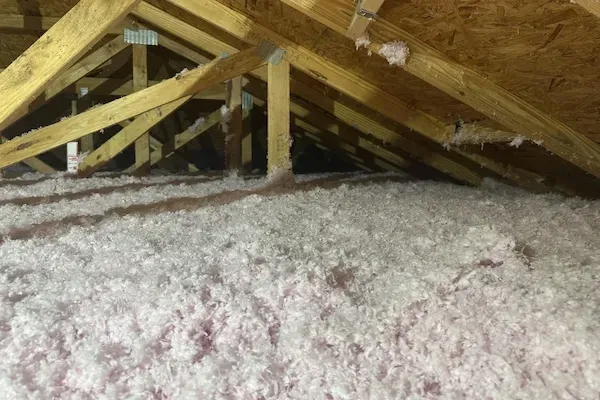
Blown-in insulation isn't the first choice for Daytona Beach properties, but it can function adequately in attic applications when paired with proper ventilation and moisture control strategies. The material needs excellent attic ventilation, moving air continuously to prevent moisture accumulation.
Roof leaks must be addressed immediately because wet blown-in insulation loses all effectiveness and grows mold rapidly. Volusia County's humidity means the material never fully dries once saturated.
Blown-in costs less at $1 to $2 per square foot, making it attractive for budget-conscious homeowners. However, the savings evaporate if you're replacing moldy, waterlogged insulation every 10 years. We've seen too many coastal attics where blown-in became a science experiment, demonstrating how quickly organic materials decompose in Florida humidity.
What About Fiberglass Batts in Beach Properties?
Short answer: Avoid them unless you enjoy throwing money away. Fiberglass batts fail spectacularly in coastal environments for multiple reasons. The material absorbs moisture from humid air, creating mold growth between paper facings.
Salt-laden air corrodes the thin fiberglass strands over time, causing them to break down and lose loft. Batts leave gaps around irregular framing, electrical boxes, and piping where humid air infiltrates freely. They provide zero air sealing capability, meaning moisture-laden outdoor air moves through walls unimpeded.
Installation quality varies wildly, with most DIY and many professional installations leaving 20 to 40 percent coverage gaps. The only scenario where batts make sense is new construction with perfect framing and immediate drywall installation, protecting them from moisture exposure.
Even then, you're getting inferior performance compared to spray foam alternatives.
Special Considerations for Hurricane-Prone Areas
Daytona Beach sits squarely in Florida's hurricane impact zone, which adds another dimension to insulation selection. Closed-cell spray foam increases roof uplift resistance and wall racking strength, helping homes survive high winds better. The material bonds structural elements together, distributing wind loads more effectively than insulation that just sits between framing members.
During hurricanes, wind-driven rain penetrates exterior walls through any gap or crack available. Spray foam seals these penetrations completely, preventing water intrusion that damages interior finishes and causes mold growth post-storm. The moisture impermeability means your insulation continues performing even if minor roof damage allows rain entry.
Traditional insulation becomes waterlogged waste requiring expensive removal and replacement after major storms. The structural and moisture protection benefits of quality coastal insulation justify higher upfront costs when you consider storm damage prevention.
Trust Silverback Insulation for Coastal Florida Expertise
Coastal home insulation requires understanding that only comes from years of Florida-specific experience. Silverback Insulation has served Daytona Beach, Ormond Beach, and throughout Volusia County's coastal communities for over 25 years.
We've seen every type of moisture problem, hurricane damage, and insulation failure mode these environments create. Our licensed and insured team knows which materials survive salt air and humidity, while which ones fail prematurely despite manufacturer promises.
Call Silverback Insulation at 352-759-4822. For expert advice on insulation for your Daytona Beach coastal property. We'll assess your specific challenges, recommend solutions proven to work in oceanfront conditions, and provide transparent pricing for insulation that protects your investment.
Serving all of Volusia County and Central Florida with expertise you can trust.
FREQUENTLY ASKED QUESTIONS
Do I need special insulation for beachfront homes?
Yes, coastal properties within a mile of the ocean need moisture-resistant insulation like closed-cell spray foam because salt air and high humidity destroy traditional materials. Standard fiberglass batts fail quickly in these conditions.
How does salt air affect home insulation?
Salt air carries corrosive particles that penetrate homes and promote moisture absorption in porous insulation materials, causing mold growth, deterioration, and reduced thermal performance. Impermeable materials resist this damage better.
Should I insulate differently for hurricane protection?
Closed-cell spray foam provides structural reinforcement that helps homes resist hurricane wind loads while also preventing wind-driven rain penetration during storms. Traditional insulation offers no structural benefits.
Can I use blown-in insulation near the beach?
Blown-in can work in well-ventilated attic applications but requires excellent moisture management and immediate leak repairs to prevent mold growth. It's not recommended for walls or crawl spaces in coastal areas.
How often should coastal homes replace insulation?
Closed-cell spray foam lasts 50-plus years without replacement, while fiberglass and blown-in materials in coastal environments often need replacement every 10 to 15 years due to moisture damage and mold growth.
Articles you might be interested in
