Open Cell Versus Closed Cell Spray Foam for Florida Homes and Businesses
Anyone comparing open cell vs closed cell spray foam quickly discovers the two materials share a name and very little else. They come out of similar equipment and go into broadly similar spaces, then behave in almost opposite ways the moment they cure.
One expands aggressively and stays soft and breathable. The other sets rigid and stops water outright. Picking the wrong one for a Florida attic or a metal warehouse is not a small mistake either, because you are committing to that decision for the remaining life of the building.
So what actually separates them, and where does each one earn its keep?
What Open Cell Spray Foam Is and Where It Performs Best
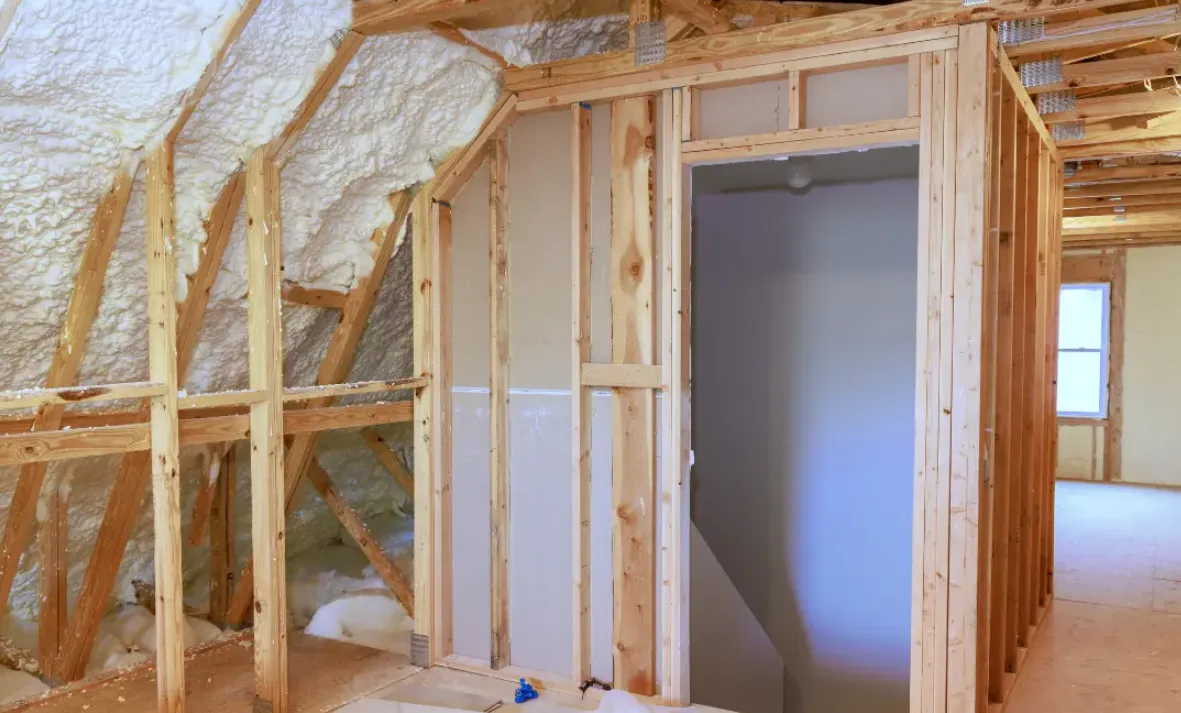
Open cell spray foam is a low density insulation that expands roughly 100 times its liquid volume, filling irregular cavities that batts cannot reach. Its cells stay open and interconnected, which leaves the material soft, breathable, and vapor permeable.
That structure delivers around R-3.5 to R-3.8 per inch alongside genuinely excellent sound dampening. It shines in attic rooflines, interior partition walls, vaulted ceilings, and any framing bay with awkward geometry. Because it is vapor open, moisture can pass through and dry in either direction rather than becoming trapped.
Where does that matter? Anywhere a roof leak needs to reveal itself instead of hiding.
What Closed Cell Spray Foam Is and Where It Performs Best
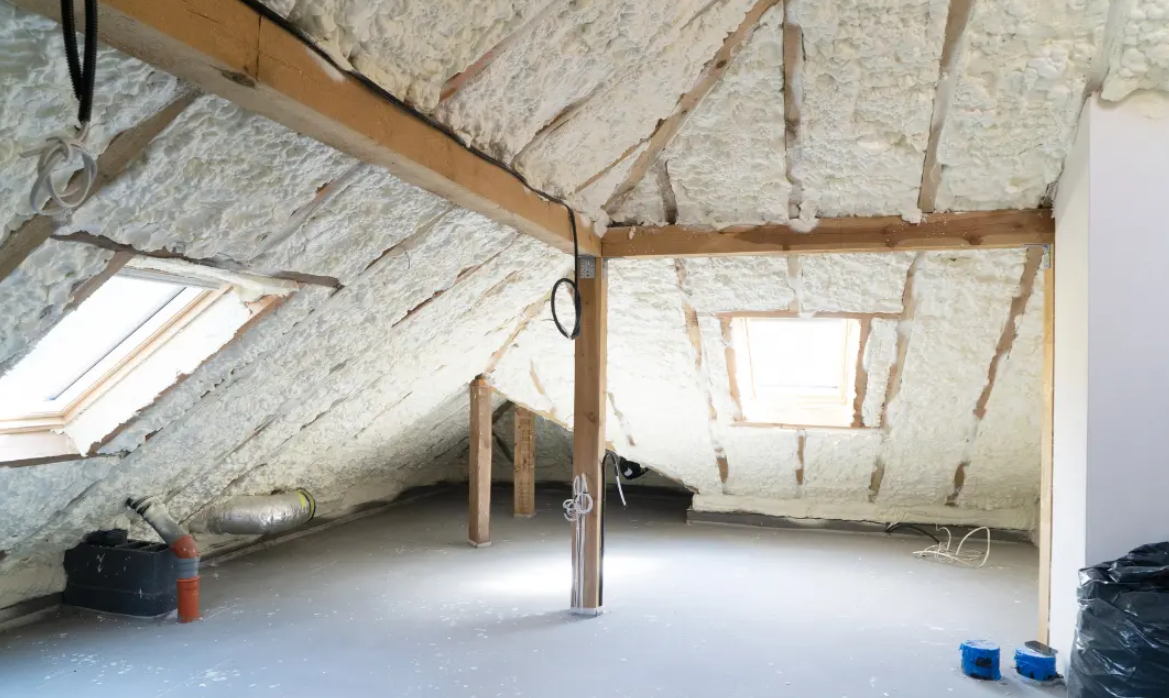
Closed cell spray foam is a high density material whose cells are sealed and packed tightly together. It expands far less, roughly 30 to 40 times its liquid volume, and is rigid enough to add measurable structural rigidity to whatever it coats.
That density buys the highest R-value per inch of any commonly installed insulation, generally R-6 to R-7. It also functions as its own vapor retarder and air barrier in a single application. Crawl spaces, exterior walls, metal building panels, flood prone structures, and commercial rooflines are its natural territory.
In coastal Volusia County, that moisture blocking behavior is frequently the deciding factor.
Open Cell Versus Closed Cell Spray Foam Compared Side by Side
Here is where the practical differences land. Neither material is universally better, and any contractor claiming otherwise is selling rather than assessing. Read the table by the space you need insulated rather than by which column looks stronger, because the highest R-value per inch is not automatically the right answer.
Which Spray Foam Suits Florida Homes and Which Suits Commercial Buildings
Most Florida homes end up with open cell in the attic roofline and closed cell anywhere moisture is the primary threat. That split is not a compromise, it is simply matching material to the problem.
Commercial buildings tend to lean harder toward closed cell, particularly metal structures where condensation forms directly on interior panel surfaces and where added panel rigidity is a genuine bonus.
Quick guidance by space:
What Drives the Cost Difference Between Open Cell and Closed Cell Spray Foam
Closed cell costs more per inch because it uses substantially more raw material to produce the same thickness. Open cell covers more area per set, which is why it dominates large attic jobs where budget matters.
These are regional industry averages, not Silverback pricing. Thickness, access, prep, and building type all shift the number, which is why a field measurement precedes any final quote.
Get Your Free Spray Foam Insulation Estimate from Silverback Insulation
Choosing between open cell vs closed cell spray foam should follow an inspection, not a brochure. Silverback Insulation includes a complimentary in person field measurement with every estimate, so the recommendation you receive reflects your actual building rather than a generic assumption about Florida construction.
Our team assesses the space, explains why one material fits better than the other, and prices the scope honestly. If open cell serves you at half the cost, that is what we will tell you.
Frequently Asked Questions
Is closed cell spray foam worth the extra cost in Florida?
It is when moisture is the primary concern. Crawl spaces, metal buildings, and flood exposed structures benefit enough from its vapor-blocking and structural properties to justify the premium. For a standard attic roofline, open cell usually delivers better value.
Can open cell spray foam cause mold in a Florida attic?
Properly installed open cell does not cause mold. Because it is vapor permeable, moisture from a roof leak passes through and becomes visible rather than being sealed inside the assembly, which is often an advantage.
Which spray foam has the higher R-value?
Closed cell, at roughly R-6 to R-7 per inch compared to R-3.5 to R-3.8 for open cell. In practice, open cell is often applied thicker, narrowing the gap in total assembly performance.
Can you use both types in the same building?
Yes, and many projects do. Open cell in the attic roofline paired with closed cell in the crawl space is a common and sensible configuration for Florida homes.
How much does spray foam insulation cost in Central Florida?
Industry averages run about $0.45 to $0.75 per board foot for open cell and $1.00 to $1.75 for closed cell. Final pricing depends on thickness, access, and prep, confirmed during your on-site assessment.
We install spray foam insulation across:
Marion County: • Ocala • Dunnellon
Volusia County: • Daytona Beach • Ormond Beach • DeLand • Lake • Helen • Orange City • Pierson • Deltona • DeBary
Flagler County: • Palm Coast • Bunnell
Lake County: • Mount Dora • Umatilla • Eustis • Astor
Putnam County: • Pomona Park • Welaka
Sumter County: • Wildwood • The Villages
