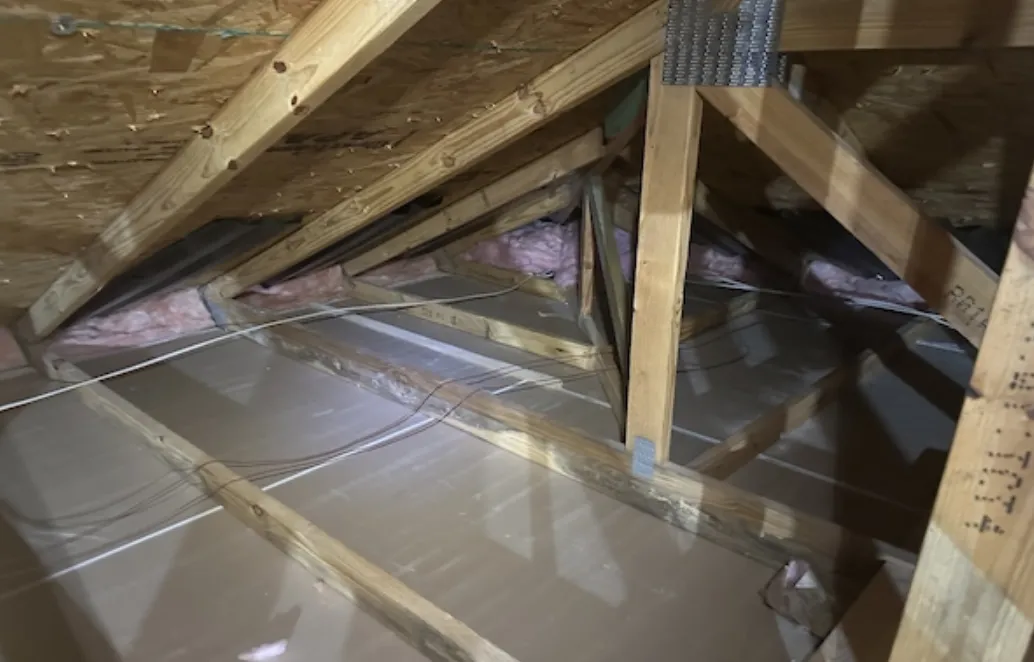
Signs Your Attic Insulation Needs Removal, Not a Top Up
Attic insulation removal is rarely the first thing a Florida homeowner considers when the power bill starts climbing. Adding a fresh layer over whatever is already up there feels faster, cheaper, and far less disruptive to daily life. Sometimes that is exactly the right call.
Other times it is the equivalent of pulling a clean shirt over a muddy one and hoping nobody looks too closely. The difference comes down entirely to the condition of the material already sitting above your ceiling, and that happens to be the one thing almost nobody inspects before ordering a top up.
So which situation are you actually in?
Why Adding New Insulation Over Old Insulation Does Not Always Work
Topping up works beautifully when the existing material is dry, clean, and evenly spread. It fails when what is underneath has already lost its structure. Insulation performs by trapping air inside millions of tiny pockets.
Once moisture, compression, or pest activity collapses those pockets, the material becomes dense filler with almost no thermal value left. Blowing new insulation on top does not revive it. You end up paying for the R-value that the bottom layer quietly cancels out.
Worse, the fresh layer seals whatever is underneath in place, where moisture and contamination keep working against your indoor air quality for years.
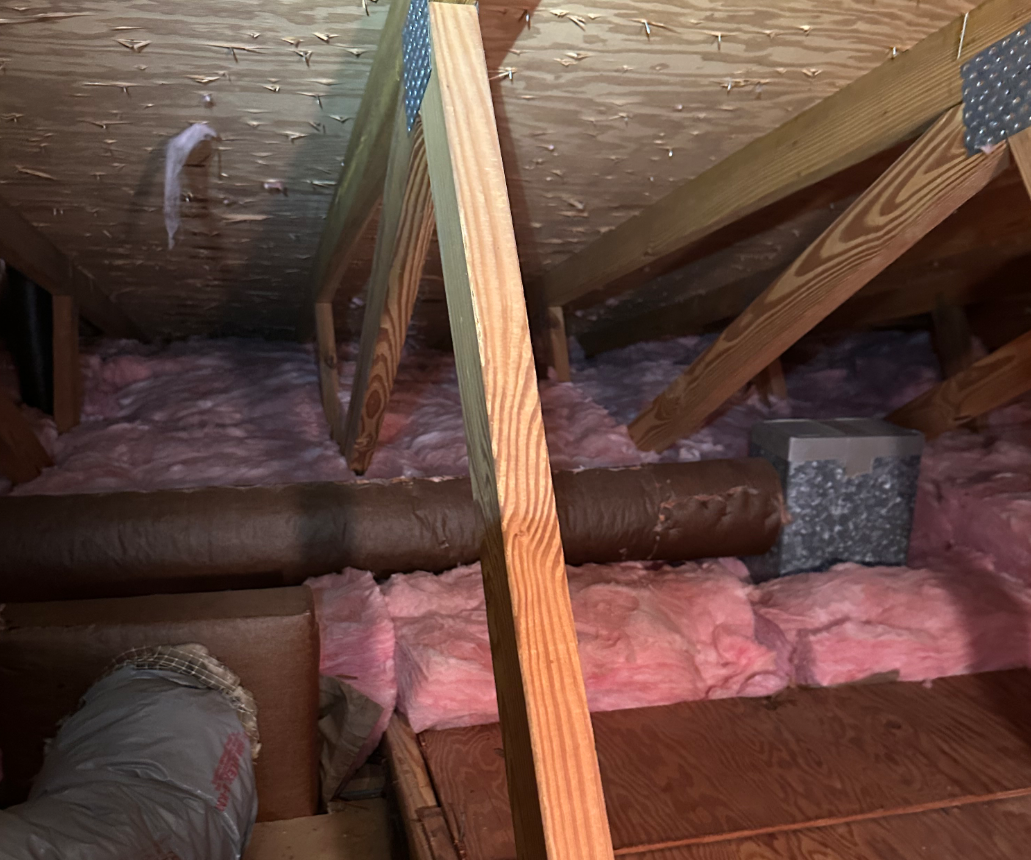
Warning Signs Your Attic Insulation Needs Removal
Most attics give plenty of notice before insulation fails outright. The catch is that the symptoms show up in your living space long before anyone climbs up to look at the cause.
Watch for these:
Rooms holding wildly different temperatures on the same thermostat setting
Cooling costs climbing while your usage habits stay the same
A musty or ammonia-like smell that intensifies near ceiling vents
Visible staining, matting, or dark patches across the insulation surface
Material sitting flat and compressed rather than light and lofted
Droppings, tunnels, or shredded nesting debris anywhere in the attic
One of these is worth investigating. Two or more usually points toward removal rather than a top up.
How Florida Humidity and Moisture Break Down Attic Insulation
Florida attics run hot and humid for most of the year, and that combination is hard on insulation. Warm moist air rises, meets a cooler surface, and condenses. Fiberglass that absorbs moisture loses a meaningful share of its R-value while damp, and repeated wetting and drying cycles flatten it permanently. Cellulose holds water even longer.
Add a slow roof leak, a bathroom fan venting into the attic instead of outside, or an AC drip pan that overflowed two summers ago, and you have material that has been quietly soaked and re-soaked.
Does it eventually dry? Usually. Does it recover its original performance? Rarely.
Rodent Damage, Mold, and Why Contaminated Insulation Has to Come Out
Attics are prime real estate for rats, squirrels, and insects, and Florida supplies all three year round. Once animals move in, insulation stops being an energy product and becomes nesting material saturated with urine, droppings, and shed hair. That contamination does not stay put.
Attic air circulates into living space through recessed lights, attic hatches, and duct penetrations. Mold behaves the same way, pushing spores along identical pathways into the rooms below. No spray, treatment, or top up layer neutralizes any of this.
The contaminated material has to be extracted and the cavity cleaned properly before anything new goes in, with entry points sealed immediately afterward so the problem does not simply return next season.
Why Professional Insulation Removal Beats a DIY Attic Cleanout
DIY attic cleanouts tend to go poorly. The work happens in punishing heat, on joists with no floor, surrounded by airborne fiberglass and possible biohazard. Professional crews use commercial vacuum systems that pull material through sealed hoses into containment bags outside the home, keeping debris out of your hallway entirely.
These reflect regional industry averages rather than a Silverback quote. Real pricing depends on attic access, material depth, and contamination, all confirmed on site.
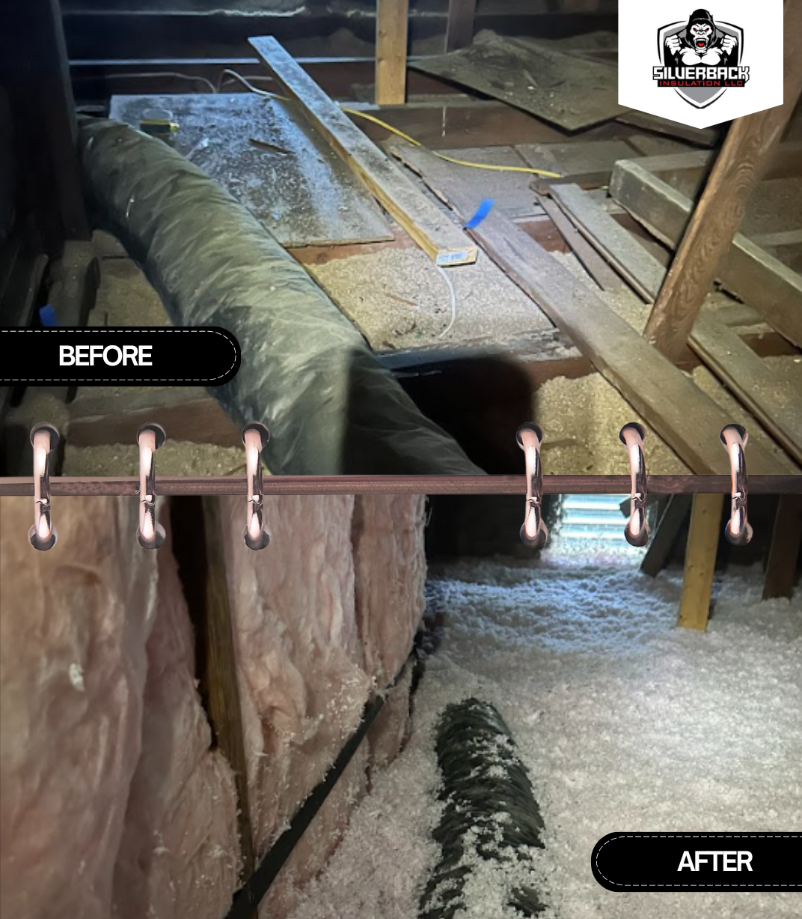
Schedule Your Free Attic Insulation Removal Assessment with Silverback Insulation
Guessing the attic condition from the hallway has never worked well for anyone. A field measurement settles it in one visit, and Silverback Insulation includes that assessment free with every estimate.
Our team documents what is up there, photographs the condition, and tells you plainly whether attic insulation removal is warranted or whether a straightforward top up will serve you better. Sometimes the honest answer is that your attic is fine.
Frequently Asked Questions
Can you just add new insulation over old attic insulation?
Yes, provided the existing material is dry, uncontaminated, and not compressed. If it shows moisture staining, pest activity, mold, or has flattened significantly, adding new material on top traps the problem and wastes the investment.
How long does attic insulation removal take?
Most residential attics are cleared within four to eight hours. Larger homes, difficult access, or heavy contamination can extend the work into a second day.
Does insulation removal make a mess inside the house?
It should not. Commercial vacuum systems move material through sealed hoses directly into containment bags staged outside, so debris never travels through living space.
How much does attic insulation removal cost in Central Florida?
Industry averages run roughly $1.00 to $2.00 per square foot, placing a typical 1,500 square foot attic between $1,500 and $3,000. Contamination raises that figure. Final pricing follows an on-site assessment.
Is old attic insulation actually dangerous?
Dry fiberglass in good condition is not. Insulation contaminated by rodent waste or mold is a genuine indoor air quality concern, since attic air moves into living space through ceiling penetrations.
We serve homeowners and commercial property owners across:
Marion County: • Ocala • Dunnellon
Volusia County: • Daytona Beach • Ormond Beach • DeLand • Lake • Helen • Orange City • Pierson • Deltona • DeBary
Flagler County: • Palm Coast • Bunnell
Lake County: • Mount Dora • Umatilla • Eustis • Astor
Putnam County: • Pomona Park • Welaka
Sumter County: • Wildwood • The Villages
