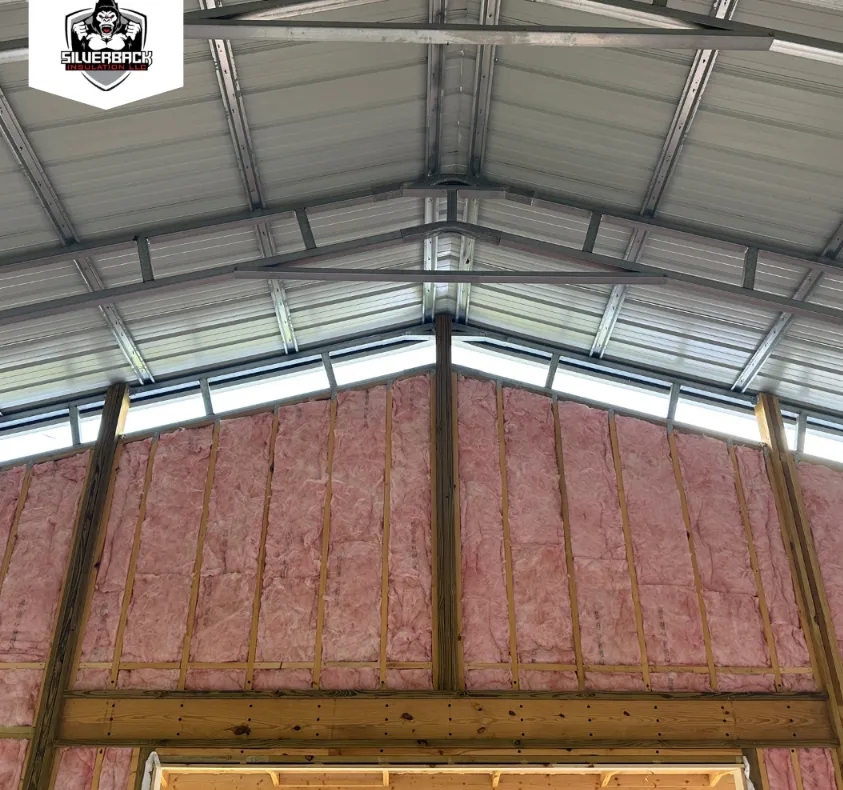
Why Fiberglass Batt Insulation Sags in Humidity
Why Fiberglass Batt Insulation Sags in Humidity and How to Prevent It
Fiberglass batt insulation sagging has one dominant cause in Florida, and it is almost never the quality of the material itself. Humidity loads the fibers and gravity finishes the job.
We see this constantly across Marion and Volusia County. Batts cut and fitted correctly on install day hang loose in the framing eight years later.
A drooping batt stops working the moment it pulls away from the surface it was meant to contact. Even a one inch air gap behind the material surrenders a surprising share of its rated performance.
So what drives that slow failure, and which installation details keep batts tight for decades?
What Causes Fiberglass Batt Insulation to Sag
Batt insulation holds its position through friction against the framing members on either side. Nothing else carries the weight.
That friction fit works indefinitely in a dry, stable cavity. It degrades once the batt gains weight, loses loft, or gets disturbed by anyone working in the space.
Three forces do most of the damage in Florida construction. Absorbed humidity makes the batt heavier than the friction can hold, repeated expansion cycles slowly compress the fiber structure, and foot traffic across attic joists crushes batts permanently flat.
We find all three at work in the same attic more often than not.
How Humidity and Moisture Weaken Batt Insulation Over Time
Fiberglass does not rot, which leads people to assume humidity leaves it alone. The fiber survives fine, but the structure holding air in place does not.
Water vapor condenses inside the cavity whenever a surface drops below the dew point. The batt absorbs that moisture, gains weight, and settles slightly under its own load.
Then it dries out and settles a little further. After enough fiberglass batt insulation humidity damage cycles, the material no longer springs back anywhere near its original thickness.
Florida runs that cycle on a near daily basis for most of the year.
What began as a snug friction fit becomes a loose batt resting on the bottom of the cavity.
Where Sagging Fiberglass Batts Show Up Most Often
Some assemblies fail far earlier than others. Orientation against gravity is usually the deciding factor.
Location | Sagging risk | Why |
Floor joists over crawl space | Highest | Gravity pulls directly away from the subfloor |
Attic kneewalls | High | Vertical cavity with nothing below to catch the batt |
High | Sloped cavity plus heavy radiant load | |
Wall studs | Moderate | Vertical, but short cavity runs resist slippage |
Attic floor, between joists | Low | Gravity holds the batt against the ceiling plane |
Batts installed overhead or in tall vertical bays carry the most risk, which is exactly where we spend the most installation time.
Signs of Sagging Fiberglass Batt Insulation Inside the Home
Most homeowners notice the symptoms long before anyone inspects the cause. The clues show up in comfort and sound rather than in the attic.
What we hear about most:
Rooms over a crawl space with persistently cold or hot floors
Interior walls that suddenly transmit more noise between rooms
A single room drifting several degrees from the rest of the house
Visible gaps or drooping material along kneewalls and vaulted ceilings
Batts sitting below the framing edge rather than filling the cavity
Any one of these warrants a look. Several together usually mean the batts have already lost contact with the surfaces they were covering.
How We Install Fiberglass Batts to Prevent Sagging
Preventing sag is an installation discipline rather than a product choice. Friction alone is not a long term plan in a humid climate.
Our crews cut batts slightly wide so the material compresses into the cavity edges instead of resting loosely between them. Facing gets stapled to the framing face at consistent intervals.
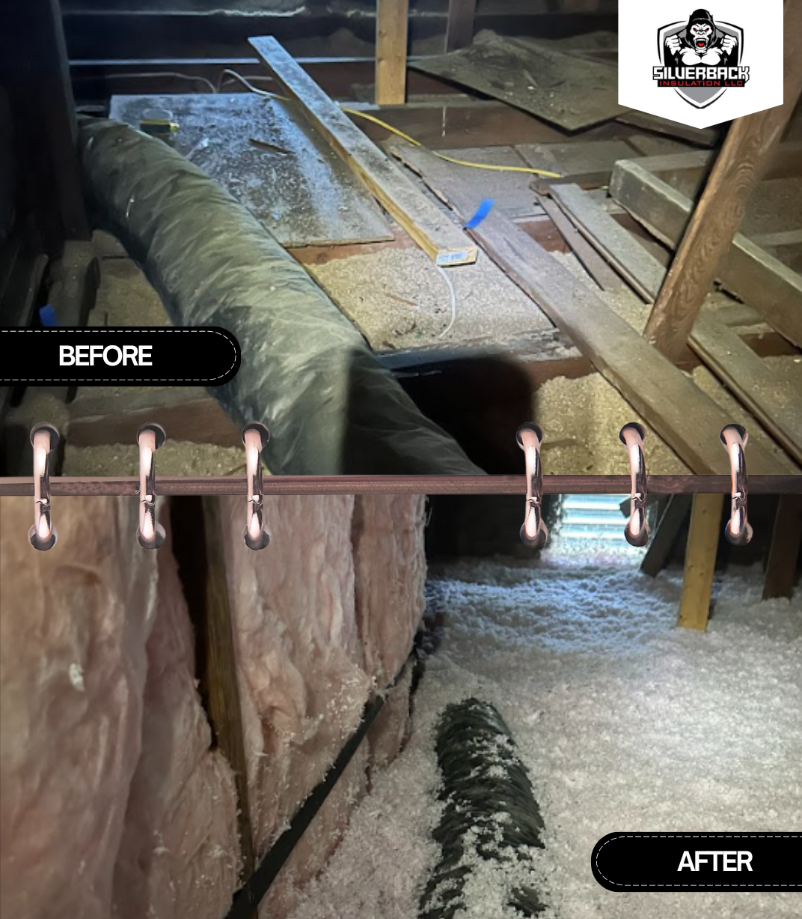
In floor joists and other overhead assemblies, we add mechanical support beneath the batt so gravity never works against the friction fit. Insulation support wire, strapping, or netting carries the weight permanently.
Every cavity gets filled corner to corner, because a batt that only partly fills its bay has room to shift.
What Silverback Insulation Does About Sagging Fiberglass Batt Insulation
Sagging batts are rarely worth re-fitting once the loft is gone. Compressed fiberglass does not recover its thickness, so reinstalling tired material reproduces the same problem.
We assess the condition first, then recommend either replacement batts installed with proper mechanical support or a different material better suited to that specific cavity. Crawl spaces and metal framing frequently call for something other than batts entirely.
Every estimate includes a free in person field measurement, so the recommendation reflects the actual assembly rather than a guess.
Silverback Insulation serves homeowners and commercial property owners across Marion County and Volusia County, including Ocala, Dunnellon, Daytona Beach, Ormond Beach, DeLand, Lake Helen, Orange City, Pierson, Deltona, and DeBary.
Why does fiberglass insulation sag in Florida homes?
Florida humidity adds weight to the batt and repeatedly compresses the fiber structure through absorption and drying cycles. Once the material loses loft, friction against the framing can no longer hold it in position.
Can sagging fiberglass batt insulation be pushed back into place?
Rarely with lasting results. Compressed fiberglass does not regain its original thickness, so re-fitting tired batts usually leads to the same sagging within a season or two.
Does sagging insulation actually reduce energy efficiency?
Yes. An air gap behind a batt allows convective looping inside the cavity, which undermines a meaningful portion of the material's rated R-value even when the batt looks mostly intact.
How do you stop insulation from sagging in floor joists?
Mechanical support is the only reliable answer. Insulation support wire, strapping, or netting installed beneath the batt carries its weight so the friction fit is never load bearing.
Is sagging insulation a sign of a moisture problem?
Often, yes. Persistent sagging in one area frequently points to condensation, a plumbing leak, or a duct issue worth investigating before new insulation goes in.
